

Movement Intelligence for Physical AI
We capture the physics of human motion at population scale the Ground Truth layer for humanoid robotics, world models, and predictive health. OWN is proud to be part of the NVIDIA Inception program, supercharging the development of next-gen edge AI and real-world motion datasets that shape tomorrow.
Vision
Research in Sensing and Embodiment Lab (RISE)
OWN RISE Lab pioneers Movement Intelligence unlocking the physics of human motion to power embodied AI. Every step captures rich, real world data on gait dynamics, terrain adaptation, and physiological signals. We bridge human biomechanics to robotics, enabling safer, more adaptive systems for the physical world.
Foundation Models for Human Movement
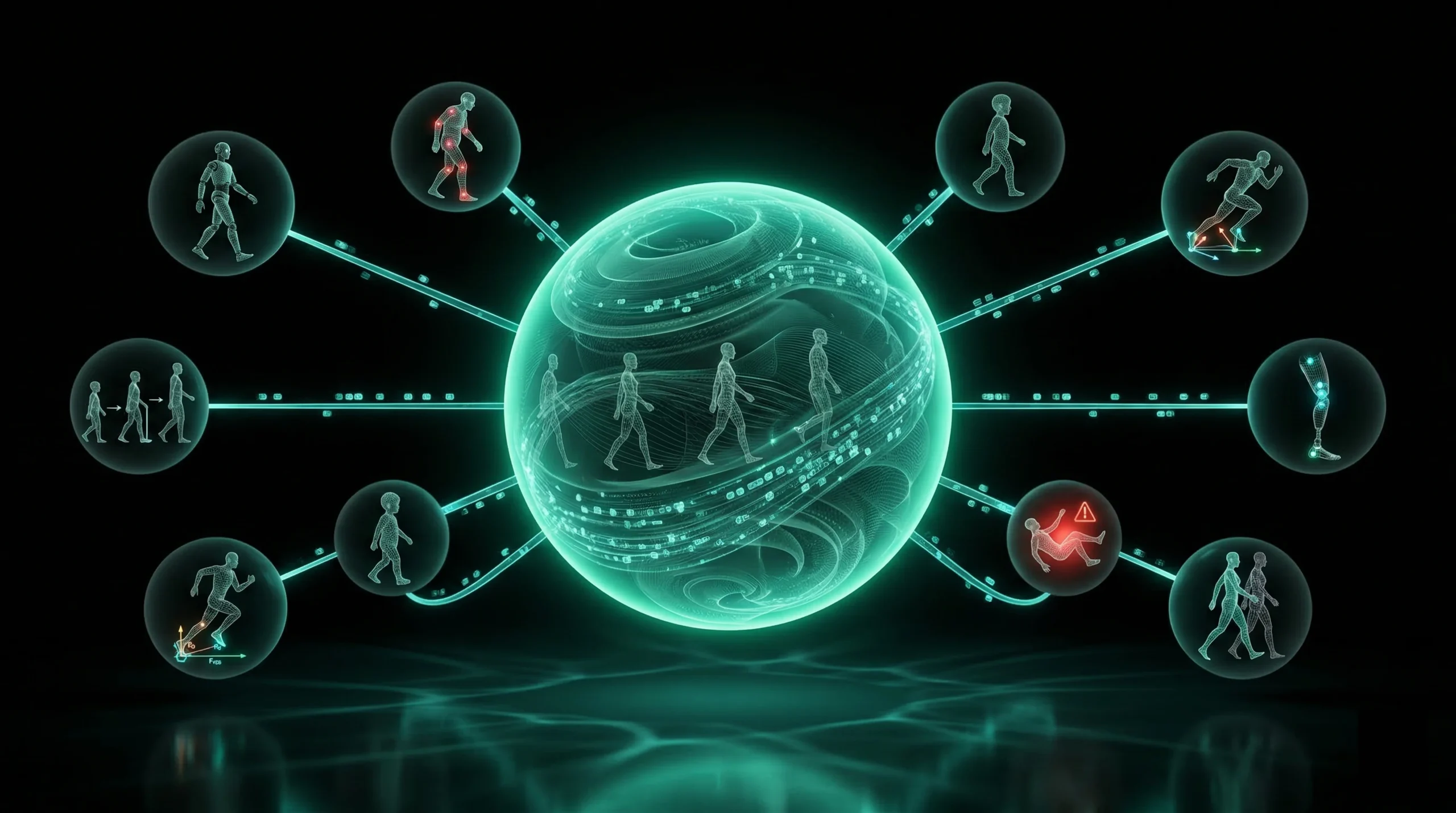
- LLMs learned language by tokenizing text. Physical AI will learn movement by tokenizing biomechanics.
- OWN captures the raw signal layer that makes this possible: ground reaction forces, pressure maps, stride kinematics, and terrain interaction at millisecond resolution across thousands of real-world users. Every step becomes a token. Every gait sequence becomes a sentence. Every user becomes a corpus.
- This is the path to a Movement Foundation Model: a pretrained representation of human locomotion that transfers across downstream tasks, from fall prediction to humanoid sim-to-real, the way GPT transfers across language tasks.
- No one else is generating this data at scale, in the wild, continuously.
Key Callouts
Tokenized Gait Primitives
- Stride, stance, swing, loading response encoded as discrete learned embeddings
Pretrained Transfer
- One base model, many downstream tasks: clinical gait analysis, robot locomotion, sports biomechanics
Scaling Law Advantage
- Performance improves predictably with more users, more steps, more terrain diversity
The sim to real gap limits physical AI
- Simulation Fidelity
Robots trained in sim produce conservative, unnatural movement
- Terrain Blindness
World models lack physics
grounding
- Data Scarcity
VLA architectures need multimodal data at scale
ground truth Pipeline
Capture
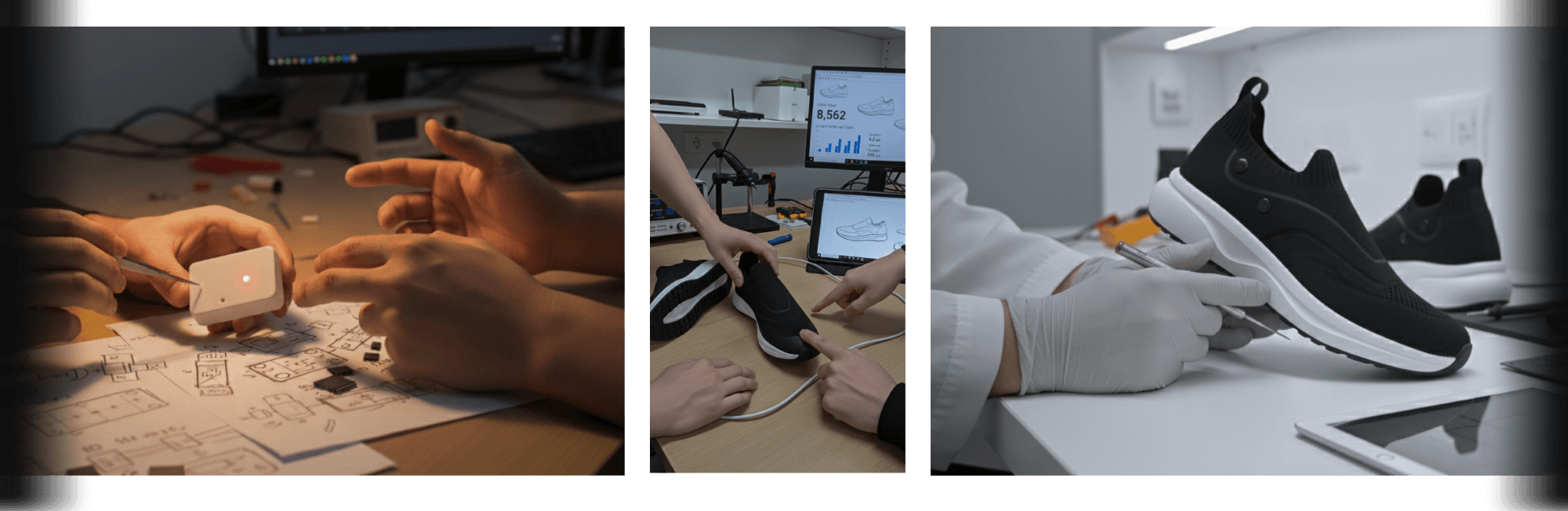
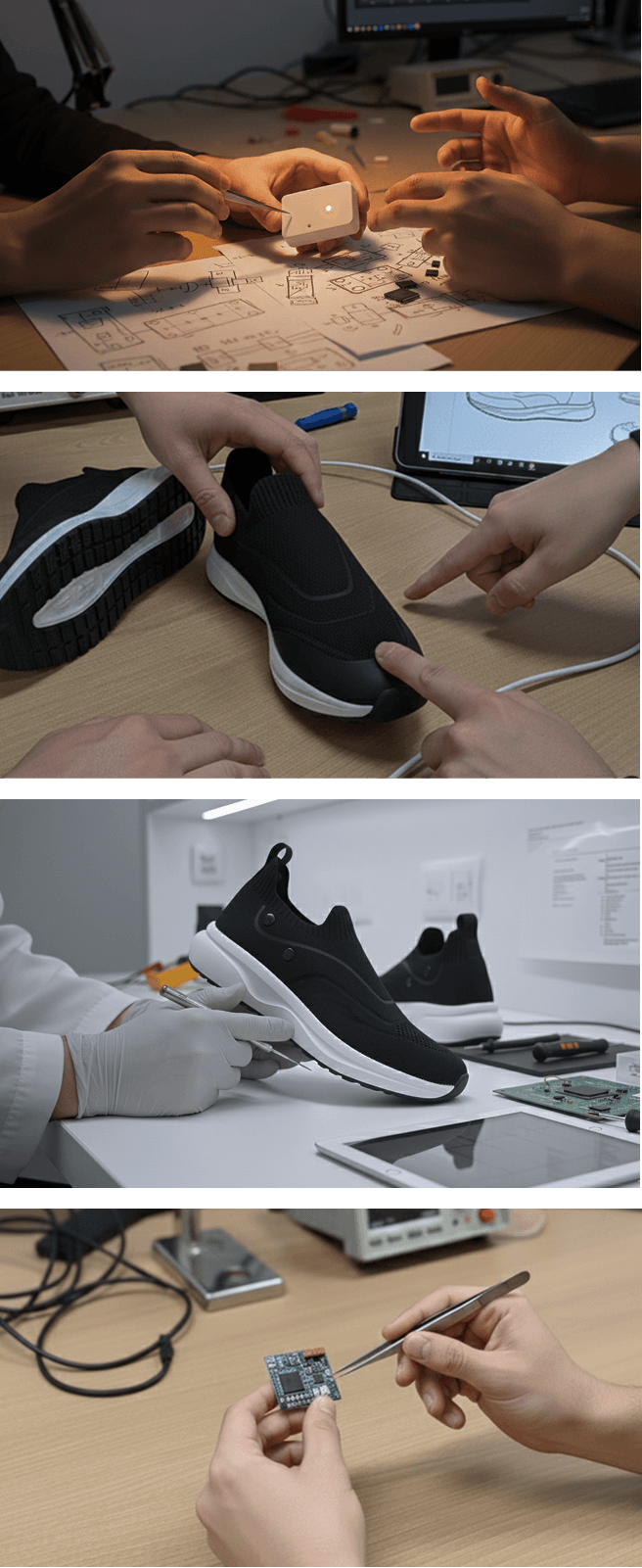
High fidelity insoles record force, pressure, inertia, and cardiovascular signals at 300Hz during natural locomotion
Process
Edge AI computes calibrated ground reaction forces, slip detection, and foot pose estimation on device
Annotate
App based labeling of terrain (gravel, ice, stairs), activity (commute, trail), events (near falls), and state (fatigue, stability)
Output
Multimodal datasets ready for training world models, locomotion controllers, and health predictors
three core products
OWN RISE Motion
Curated multimodal datasets for robotics training
- Population scale ecological data (not lab constrained)
- Formatted for major physics engines and RL frameworks
OWN RISE World
Terrain datasets for sim to real transfer
- Surface properties cameras can't capture (friction, compliance, stability)
- 100+ terrain types mapped with ground interaction data
- Physics priors for world models and synthetic data validation
OWN RISE Health
Foundation models for disease prediction
- "The Sixth Vital Sign" (gait predicts mortality)
- Pre symptomatic detection: neurodegeneration, cardiovascular, frailty
- Edge to cloud deployment options
Key research areas
Gait &
Balance
Quantify asymmetry, stability, and recovery for fall prevention and robot bipedality
Foot Pose & Terrain
Map ground interactions across 100+ surfaces, informing sim to real transfer
Cardiovascular Signals
Pair heart rate with motion for fatigue detection and load response
Edge
Cases
Annotated slips, perturbations, and adaptations from real world steps
Powering breakthroughs in humanoid robotics, clinical gait analysis, and synthetic data calibration.
applications
Sim to Real Transfer
Calibrate physics engines, enable zero-shot policy transfer
World Models
Physics priors that video only
models lack
Vision Language Action
Multimodal training data for
generalist robot policies
Clinical Biomarkers
Remote monitoring and digital
therapeutics endpoints
Every Step is the Ground Truth
OWN RISE Lab collaborates on dataset access, joint publications, and coresearch. Ideal for robotics, biomechanics, and health AI groups.